8 Car Maintenance Services Every Driver Should Know About
August 31, 2026
You do not need to know how to rebuild an engine to take good care of your car. What helps much more is knowing which maintenance services come up regularly and why they are worth doing.
At our shop, we see the difference between vehicles that have been maintained consistently and ones that only come in after something stops working. These eight services cover many of the basics that keep a car dependable and give us a chance to catch wear before it becomes a larger repair.
1. Engine Oil and Filter Changes
Engine oil lubricates bearings, camshafts, timing components, and other moving parts. It also carries heat and holds contaminants in suspension until the oil and filter are replaced.
The right interval depends on the engine, oil type, mileage, and driving conditions. Short trips, heavy traffic, towing, and long periods of idling can work the oil harder. We also check the level because an engine that consumes or leaks oil can run low before the next scheduled change.
2. Tire Rotation and Pressure Checks
Tires do not wear at the same rate in every position. Front tires handle steering and much of the braking load, while drivetrain layout changes how power is distributed through the set.
Rotating them at the proper interval helps spread that wear more evenly. We also check pressure and look across the full tread for inner-edge wear, cupping, cracking, or other patterns. Those clues can point toward alignment or suspension trouble before a tire is ruined.
3. Brake Inspection and Service
Brake pads are designed to wear down, but waiting until they grind usually costs more. Once the friction material is gone, the metal backing plate can cut into the rotor and damage it quickly.
During an inspection, we look at pad thickness, rotor condition, caliper movement, and brake hardware. Uneven wear gets our attention because a sticking slide or caliper can destroy one pad much faster than the others. Brake fluid also needs service according to the vehicle's schedule rather than being ignored indefinitely.
4. Cooling System Maintenance
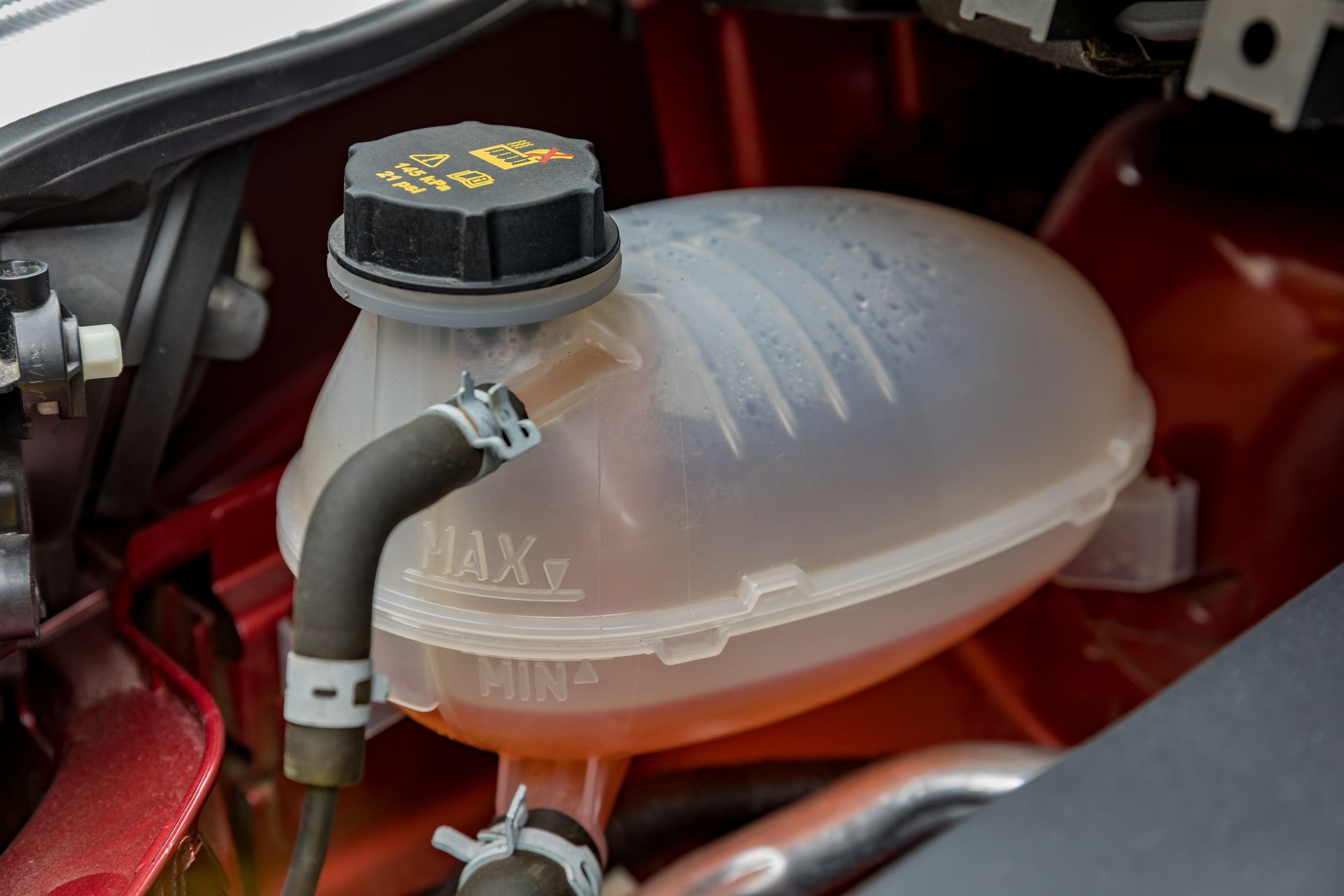
Coolant keeps the engine within a safe temperature range and protects the cooling system from corrosion. Over time, the fluid ages and hoses, seals, radiators, and water pumps can begin leaking.
We look for dried coolant residue, swelling hoses, low reservoir levels, and signs of seepage around the water pump or radiator. If coolant keeps disappearing, topping it off is not the repair. Finding the leak before the engine overheats is the better approach.
5. Transmission and Drivetrain Fluid Service
Transmissions, differentials, and transfer cases all depend on fluid for lubrication and heat control. Those fluids work under load and eventually need attention.
Service intervals vary widely, so we follow the requirements for your exact vehicle. If a transmission already slips, delays engagement, or bangs into gear, we diagnose that first. Fresh fluid is regular maintenance. It does not rebuild worn clutches or repair internal damage.
6. Battery and Charging System Checks
A battery can start the car normally one week and struggle the next, especially as it gets older or temperatures change. Corroded terminals and charging-system problems can shorten battery life too.
We check battery condition, connections, and charging voltage when there's reason to suspect trouble. Slow cranking, repeated jump-starts, dim lights during startup, or unexplained electrical warnings are worth checking before the vehicle reaches the point where it will not start.
7. Belts, Hoses, and Filters
Belts and hoses spend years dealing with engine heat. Serpentine belts can crack, glaze, fray, or become contaminated with leaking fluid. Coolant hoses can swell, soften, become brittle, or start seeping around their connections.
Engine air filters and cabin filters need attention for a different reason. Dirt gradually restricts airflow through them. We replace these parts based on condition and the maintenance schedule, not by assuming every filter or belt needs changing whenever the car is in the shop.
8. Steering, Suspension, and Alignment Checks
Suspension wear tends to sneak up on drivers. A car can slowly develop a clunk, crooked steering wheel, extra body movement, or uneven tire wear, and the change becomes easy to get used to.
We check tie rods, ball joints, control arm bushings, shocks, struts, and related parts for looseness or damage. Alignment deserves attention when the vehicle pulls, the steering wheel is off-center, or the tires develop abnormal wear. Correcting a worn suspension part before aligning the car is important because loose components will not hold the wheel angles where they belong.
Keep Maintenance Based on the Vehicle You Actually Drive
Not every service comes due at the same mileage, and not every driver puts the same stress on a vehicle. A commuter covering mostly highway miles has a different maintenance pattern from a vehicle used for short trips, delivery work, towing, or heavy city traffic.
Keeping good service records makes the whole process easier. We can see what has already been done, what is coming up, and whether a fluid leak or wear pattern is changing from one visit to the next. That is much more useful than starting from scratch every time the car comes in.
Get Car Maintenance In Minnesota, With Nelson's Automotive
If you are not sure which services your vehicle is due for, Nelson's Automotive can review its mileage, maintenance history, and current condition at its Minnesota locations serving Minneapolis, Chaska, Wayzata, and surrounding communities.